The initial topic for this article was the role of artificial intelligence (AI) in photography. I had planned to lean on my background as a software engineer to dispel what I see as common misconceptions about AI and make the case that technology isn’t the enemy of art.
But between the moment of inspiration and the completion of a final draft, the direction of my articles often shifts as I research and learn more about a topic. Such was the case with this article.
The more I thought about technology’s role in art, the more obvious my conclusions felt, and eventually I had an article that felt to me like it didn’t actually say anything worthwhile. Of course technology itself is not the enemy. Photography has been evolving in tandem with technological advancement since View from the Window at Le Gras was created nearly 200 years ago. You could even argue that photography wouldn’t exist were it not for the technological advancements that have allowed images to be captured on some medium, from glass plates to digital sensors. The development of AI-powered tools like automated sky replacement is no more a threat to photography than the invention of film, digital cameras, or Photoshop itself.
The real conundrum is how to reconcile the major technological advancements of our time with our own creative rhythms and perceptions about what makes photography a worthwhile pursuit for us.
The term artificial intelligence sounds futuristic and calls to mind scenes from popular science fiction. In reality, AI is both a real area of study within computer science as well as a buzzy software marketing term.
Practically speaking, modern AI encapsulates various human-like capabilities that emerge when computers are programmed to learn by example — or more accurately, lots of examples. By processing millions of sample data points within some domain, computers can detect patterns both obvious and subtle, then use those patterns to make predictions. And those predictions can be really impressive, especially if the computer has detected a subtlety that we humans weren’t even consciously aware of.
AI techniques have been applied with great success to navigation, natural language understanding and generation, image recognition, de-aging and resurrecting actors, and now photography software. And as computers have continued to get smaller, faster, and cheaper, the ability for consumer devices to take advantage of AI has grown.
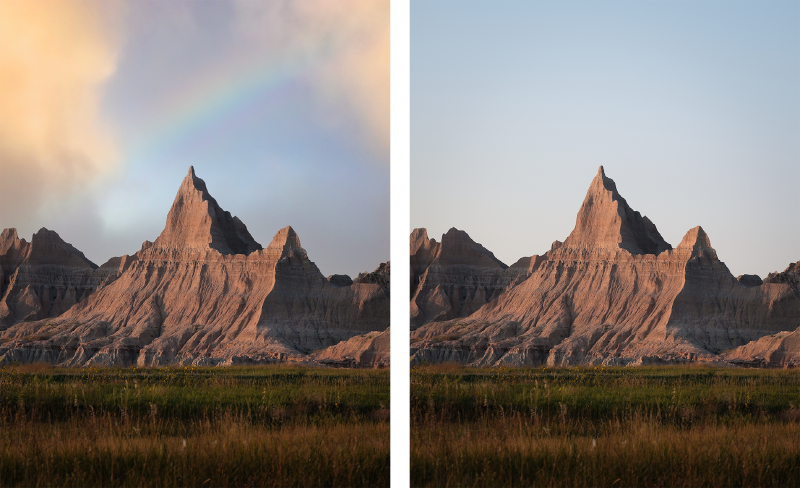
Consequently, the term artificial intelligence has also seen a big bump in trendiness over the last few years (just count how many times it appears in this blog post announcing Adobe’s October 2020 Photoshop updates). But it isn’t magic. It isn’t here to ruin or take over photography. It’s just an easy way to talk about the latest and greatest technology that has been used to augment the tools of modern photography.
Furthermore, the arrival of AI in photography software does not change decisions that we already have to make about how much editing we are comfortable with in our photos (potential economic arguments aside), or the ethical dilemmas presented by photo manipulation. Nor does it impact our artistic vision, our intentions, or why we choose to pursue photography in the first place. We don’t even have to use these tools if they make us uncomfortable or detract from the experiences that make photography worthwhile to us.
While AI in photography is certainly an interesting topic that is worthy of further discussion, I think it’s more interesting to think about the impact that technology has on our creative rhythm, or how we use our time during the pursuit of artistic photography.
This idea isn’t something I came up with myself. Two of my favorite photographers discussed these ideas recently in On Landscape magazine: Guy Tal in his article Opportunity Cost, and Chris Murray in The Cost of Convenience.
Murray writes:
Yes, time is valuable, but if the goal is to create a meaningful work of art, what better use of time is there? Technology has ushered in the era of immediacy…
It is telling that both authors include the word cost in their titles. Their point is clear: the price we pay when we focus on reaching the end result as quickly or as effortlessly as possible is the experience that makes that end result worthwhile, time in which we allow the seeds of creative expression to germinate and grow. In other words, the time we save doesn’t necessarily come for free. We must consider whether the benefits of new technology come at the cost of losing the time required for personal or creative fulfillment.
Ideally, over the course of the time we spend pursuing photography, we settle into behavioral and cognitive patterns that are harmonious with our own creative rhythm. Consciously or not, we make time in those rhythms for processes that are essential for creativity. Those processes might take the form of actively engaging our minds to come up with new ideas, perhaps by brainstorming with a pen and paper, but more likely, they take the form of mundane or repetitive tasks that give our minds a bit more space to wander, explore new ideas, and reflect on our work. To form new connections. To let the creative kindling take.
I think that part of the challenge presented by new technology is that sometimes it introduces changes — whether they are new techniques in the field or new tools at our desks — that disrupt our creative rhythm. Sometimes a little disruption can be useful for breaking out of creative ruts and generating new ideas, a concept I explored in my previous article. But sometimes the disruptions can be inhibitory.
So my argument here is not that technology is anyone’s enemy, but rather that it creates changes to our environment that we need to reconcile with our own creative rhythms. Some changes may detract from the experience that we seek from photography, or chip away at time we didn’t know we needed to be creative. Others may be able to help us with a time-consuming process that only slows us down.
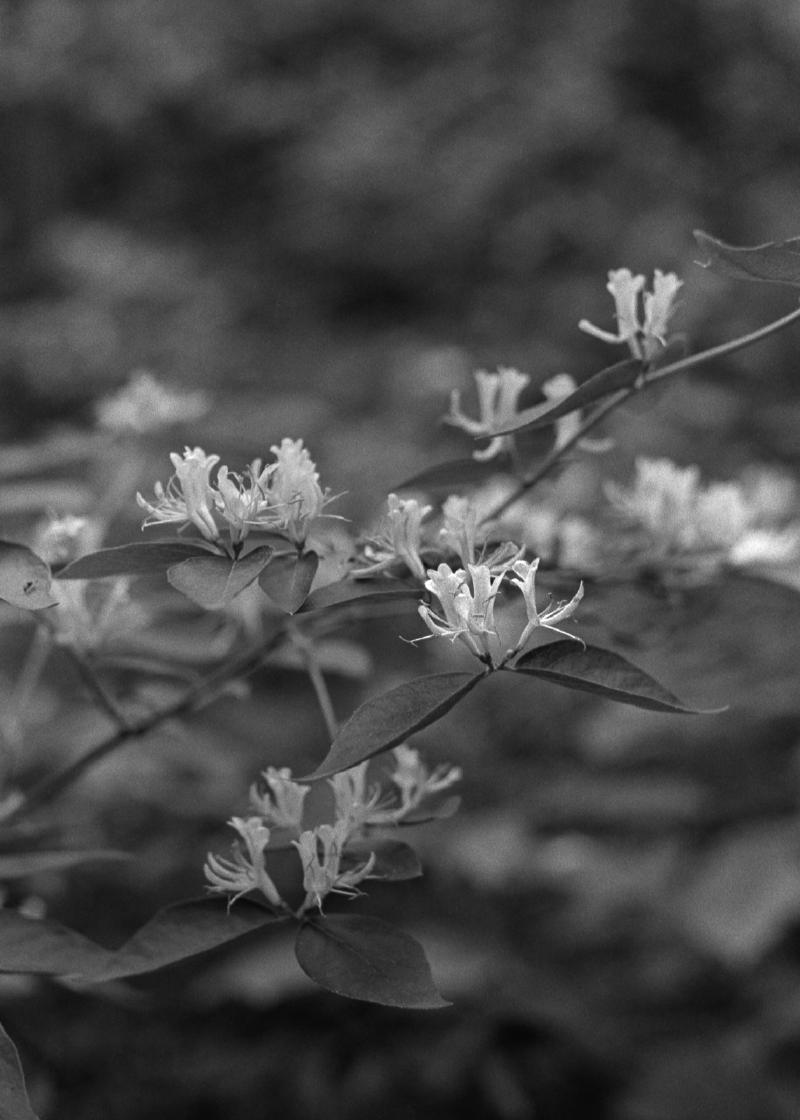
I think this idea applies to our creative pace more broadly, beyond the role of technology in photography. Think about how you work best. Do you work well under pressure, chasing interesting weather conditions or the epic light of sunset? Or maybe you prefer opportunistic shooting during a casual hike? Do you like to work fast, or with a slower approach? Do you enjoy the convenience of modern digital cameras or the tradition of large format analog photography? Whatever your answers are, I encourage you to think about how your preferred photography experience is shaped by your creative rhythm.
Ultimately, I believe that we need to find the pace that enables us to achieve the creative experience we seek. Maybe we need to slow down. Maybe we need to give new shortcuts a try. Either way, we should embrace the tools and techniques that work harmoniously with our creative rhythm, and move on from those that do not.