What is home to you?
On first consideration, a particular place may come to mind. But I think of home as a feeling, one that is difficult to describe but unmistakable once you experience it. It is a sense of familiarity. Comfort. Belonging.
For me, the feeling of home is not limited to where you live, or where you grew up, or even to places you have been before. It is born from a connection, one that can be discovered and nurtured even in the most unexpected of places.
Roots#
I grew up in the rolling, crop-covered plains of southwestern Iowa. Contrary to what some might envision, this part of the country is not flat. Like a great rumpled quilt, a patchwork of farmland blankets low, undulating hills. From the crests of many of these hills, you can experience unobstructed views for miles. Standing on the porch of the house where I grew up, I can see red safety lights blinking atop wind turbines some 15 miles away.
As a child, this carefully tended, rural landscape was all that I knew. The grass was green; the sky was blue. Corn and soybeans took their yearly rotations through the fields. My brothers and I explored the timber and played in the creek (or as we called it, the “crick”). Quiet was the norm. Life was simple in the heartland, and I knew no other way.
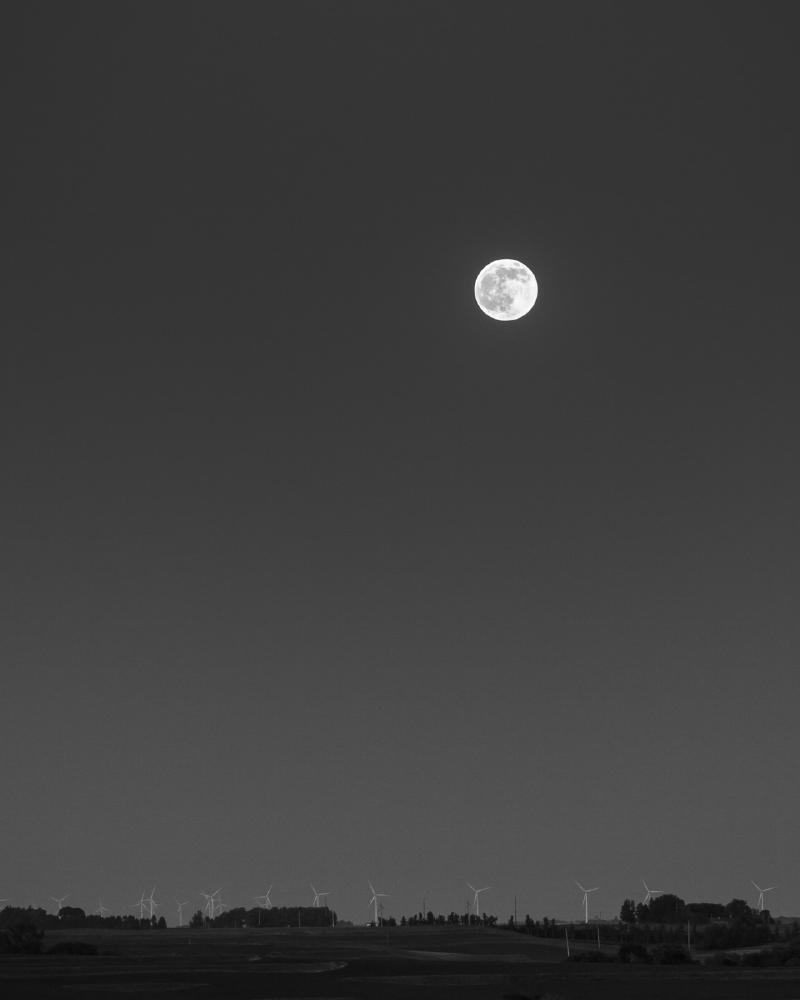
I had no concept of what that open landscape meant to me when I left it for the first time in 2012, bound for the sprawling concrete jungle of Washington, DC.
To call myself a fish out of water would have been a comical understatement. In addition to untold cultural differences between rural Iowa and the DC area, I also discovered an entirely new natural landscape. Gone were the open spaces and long views of the Midwest, replaced instead by dark, dense forests. Their novelty was captivating at first, but eventually I developed an unscratchable itch to see beyond the trees that surrounded me. I began to feel claustrophobic, longing for the unobstructed views of the Great Plains.
Such was my first inkling of the impact that those plains had imparted on my psyche. And if there was any doubt about that impact, it became even clearer during one of my long drives back home at the end of the summer.
Ten years later, most of that particular drive remains a blur in my memory. I made the journey many times, after all. But I distinctly remember the moment where, somewhere in Illinois, I felt something inside me change, as if a knot had released. On either side of the highway before me, fields of green stretched into perpetuity. I felt my grip on the steering wheel loosen almost imperceptibly. My shoulders lowered a few millimeters. I felt a smile slowly creep over my face, eyes stinging with joy. I might have had hundreds of miles of driving left, but I was home. I could feel it in my soul.
Refuge#
Four years later, I found myself back in the DC area working at my first “real job.” By then, I was accustomed to the cultural differences from rural Iowa and had grown much more comfortable navigating the urban landscape I now called home.
Essential to finding balance, however, were my regular weekend excursions to a magical place called Shenandoah National Park, home to rolling blue mountains, craggy peaks, dark hollows, and most importantly for me, miles and miles of untamed wilderness. There, I could find quiet solitude. Despite the 90-plus-minute drive from my one-bedroom apartment on the outskirts of Alexandria, Shenandoah became an important place to me where I regularly sought refuge from the noisy, sprawling chaos of the city.
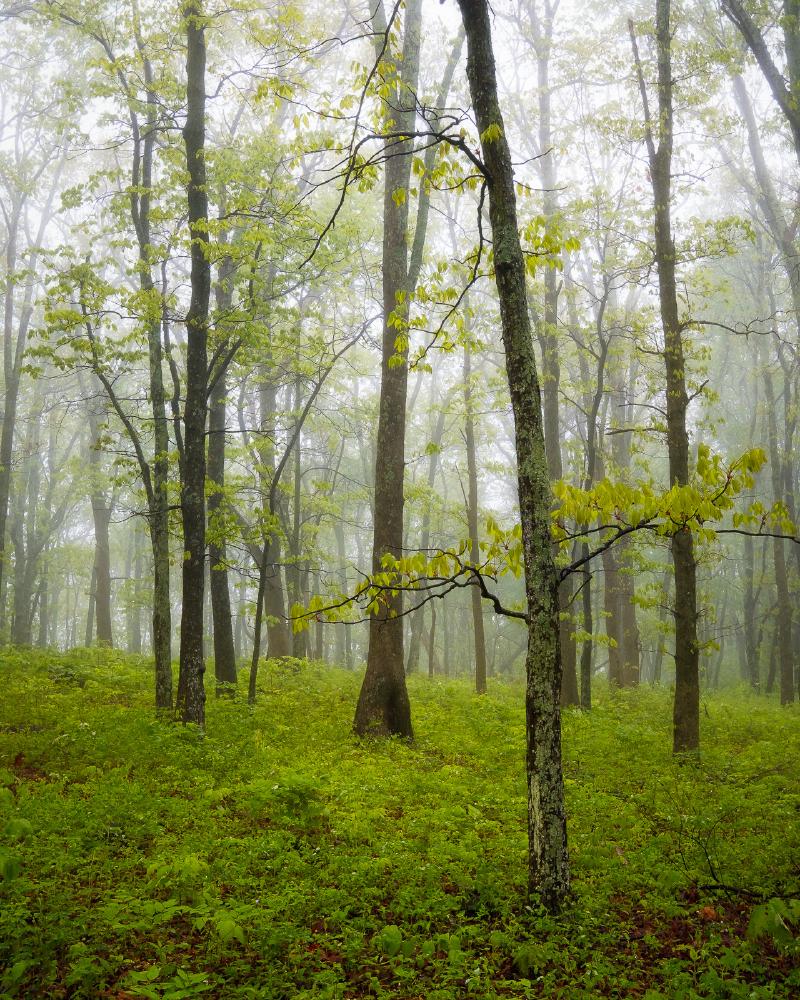
My relationship with Shenandoah did not begin with love at first sight. While I felt at ease in the solitude I could find on its remote trails, it was yet another landscape that was foreign to me. Just as I had experienced elsewhere in the Mid-Atlantic, I found myself surrounded by impenetrable, claustrophobic forests. They were daunting and mysterious to me. Sometimes eerie.
But the sense of wilderness I was able to experience was invigorating. I discovered endless opportunities for hiking and exploring, for challenging myself physically and mentally. I found overwhelming beauty, from the lichen-covered rocks below my feet to the mist that flowed like a great river through the park’s long valleys. Rocky overlooks rewarded me with views for miles and miles, providing me with perches from which to witness awe-inspiring, pastel sunrises and warm, quiet sunsets.
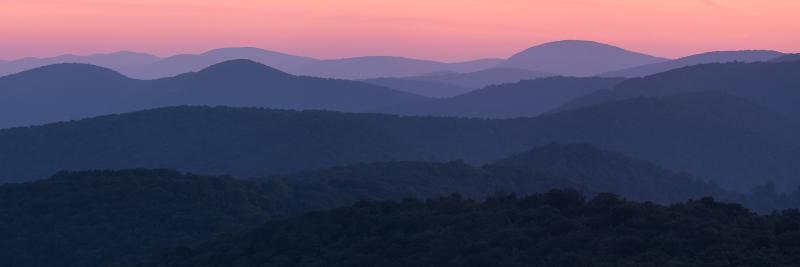
I found a new kind of entrancing beauty. While somewhat bolder than the rolling plains on which I grew up, over time, it was no less comforting.
Over the course of my many visits to Shenandoah National Park, I began to see past the park’s grandeur and fall in love with its subtleties. The effect that this shift in perspective had on my relationship with photography was profound. Up to that point, I had been relatively casual in my approach to creating images. My goal had been simple: to create beautiful images. While that goal is worthwhile in its own right, Shenandoah provided the perfect environment for me to connect with nature on a deeper, more meaningful level, and begin to see photography as a means to a particular kind of experience. I embraced a more intimate approach to photography and I discovered its power to express something more than aesthetic beauty.
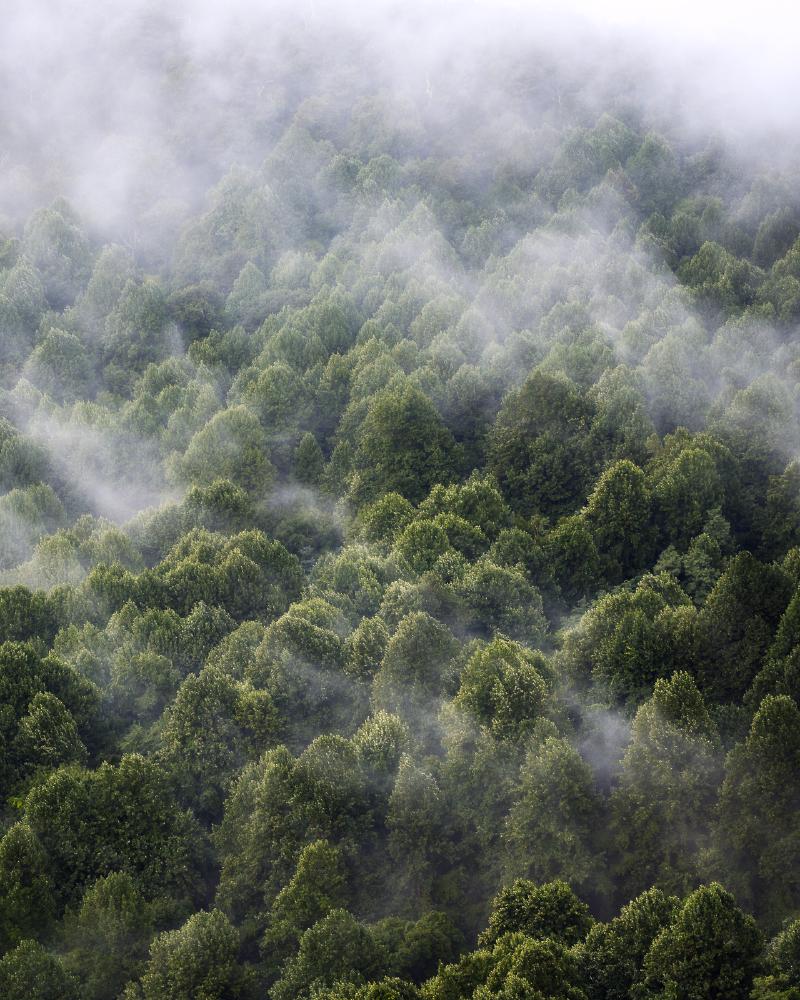
The growth that Shenandoah National Park fostered in me was not limited to my photography. I also felt myself grow personally as I became acquainted with newfound confidence and independence. One particular excursion, etched fondly in my memory, illustrates this growth better than any other.
The temperature reading on my car’s dashboard read 7° F when I arrived at the trailhead. I knew it would be a brisk morning —- I love brisk mornings. But at that temperature, I would be pushing the limits of my gloves and boots. I had brought my camera in the hopes of finding some interesting ice structures to photograph, but keeping my hands warm enough to operate it would be a challenge.
I was stopped for minutes at the first frozen waterfall before I felt the heat draining from my feet, sapped by the frozen, rocky ground. Not long after that, my hands began to sting as they quickly lost all dexterity. I made a few forgettable images, but out of concern for my extremities, I packed up my gear and continued down the trail, flapping my arms around in a desperate attempt to restore the flow of blood to my fingers.
After a few miles’ worth of hiking, I began a long, gradual ascent up a forested hill. There was no snow on the ground; just a thick layer of crunchy, frozen leaves left over from the past fall. The sun shone brightly through the bare branches overhead. In the sparse foliage of winter, the views through the trees around me were relatively open. I hadn’t bothered to take my camera out since the frozen waterfall, choosing instead to simply enjoy the hike and keep moving to stay warm.
There was a moment on that sunny hillside where I paused to rest and was suddenly overwhelmed with emotion. Maybe it was the joy of being outdoors, or the contrast of the cold, fresh air and the warm, welcoming sun. Maybe it was the endorphins coursing through my veins after my morning of exercise. Whatever the cause, I was overcome with gratitude. There I was, on the coldest of January mornings, in the most beautiful of wild places. I stood in the silence, absolutely alone, my only company squirrels and deer who were indifferent to my presence. There was no evidence of another person that I could see nor hear. That morning, I had the park to myself.
I felt satisfied in the deepest sense of the word. Whatever I had gone there for that day, I found it in abundance. Though I stood alone in the cold, I felt warm, content, and grateful. Lingering stress from work, doubts that I had about myself, fear and apprehension about the future and finding my way in this world — all were momentarily non-existent, replaced with the reassuring feeling that what I was experiencing in that moment was everything that I needed.
It took a few years to recognize, but that overwhelming feeling that hit me so unexpectedly in that morning was the feeling of being home.
To be continued in The Way Home, Part II.