Note: This article is a continuation of The Way Home, Part I.
Discovery#
When my now-wife and I moved away from the DC area, bound for her hometown of St. Louis, Missouri, I was filled with conflicting emotions.
On the one hand, I felt relief. The constant commotion in DC is a far cry from the slow, relaxed Midwestern lifestyle that I was used to. Finding a sense of belonging there had never come naturally for me. In some ways, I was eager to leave a place where I had always felt a little out of place.
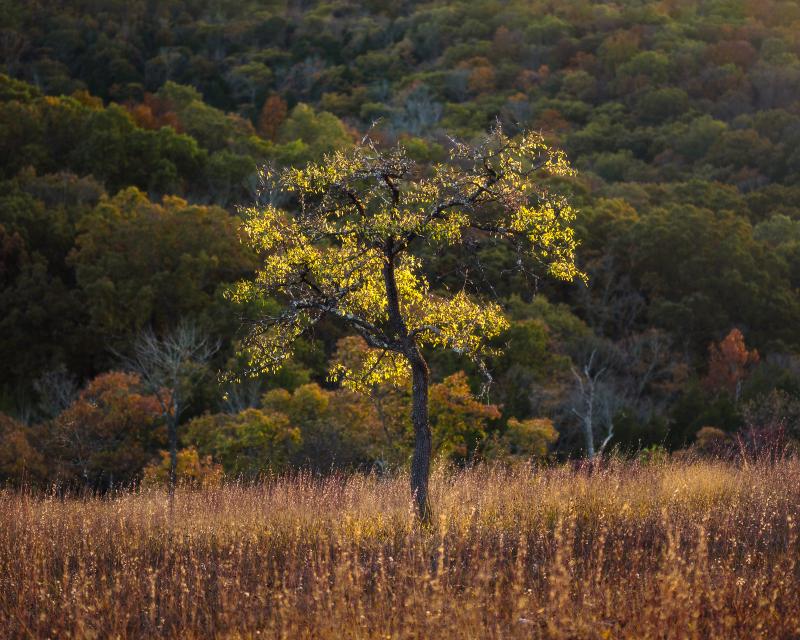
On the other hand, despite the challenges, I eventually found balance and growth through my retreats to Shenandoah National Park. While I got by in the city, I thrived in those mountains. There, I not only explored new ideas about creativity, refining old ways of seeing and nurturing new ones, but also gained confidence and came to know myself more deeply.
As a result of the artistic and personal growth I had experienced through my visits, moving away from Shenandoah National Park felt a bit like moving away from a close friend. But with one final backpacking trip, I thanked those mountains for the change that they had made in my life, said my farewells, and in the summer of 2018, made the trek to St. Louis. I reluctantly accepted that I would just have to find new sanctuaries.
Without a vast expanse of wilderness near our new home, I spent the first year getting to know many of the local state parks and conservation areas. While I was pleasantly surprised by much of what I discovered, none of the places I visited gave me the same sense of wilderness and mystery that I was used to. I found myself struggling to connect with the landscape in the way that I had been able to with Shenandoah.
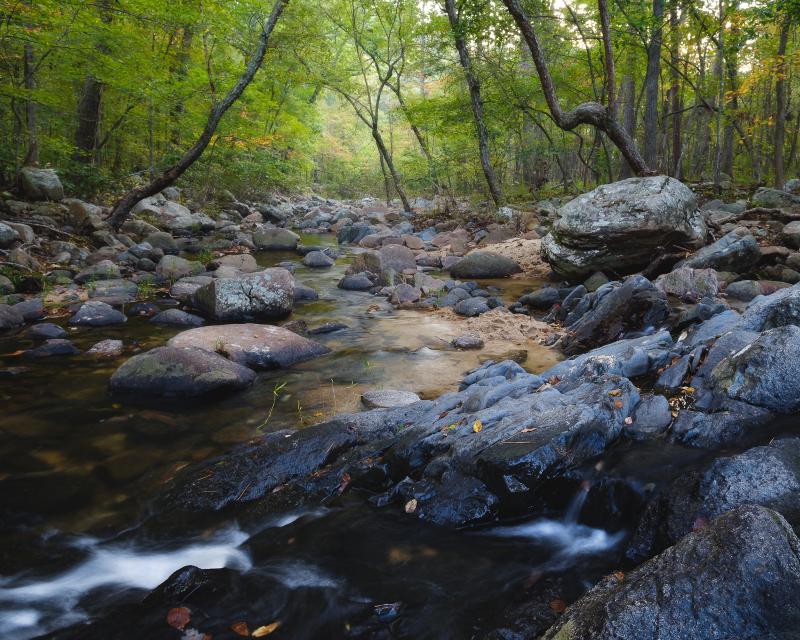
In early September of 2019, I decided that I needed to venture a little further out of my comfort zone. I wanted to experience real solitude again. I craved the feeling of discovery.
It didn’t take long for me to choose Badlands National Park as my destination.
By car, Badlands National Park is about 12 hours from St. Louis, but just 6 hours from where I grew up. Despite its relative proximity, I had never been there. What I knew about it was only what you might see on a postcard —- bison, grasslands, prairie dogs, and of course, the park’s namesake geological formations. I learned a bit more in my pre-trip research, which consisted of studying park maps, writing down a few trails that might be of interest to me, and reserving a drive-in campsite, so that I knew I would have somewhere to park my car and sleep.
With the trip’s skeleton in place, I hit the road, details to be worked out when I arrived.
I had no idea what awaited me. As I made my way west across South Dakota, the plains welcomed me with open arms. I was completely surrounded by unobstructed sightlines to every horizon, gentle hills stretching as far as I could see. But as I approached Badlands National Park, the ground fell away, leaving only towering, striated badlands. Thousands of these tall, layered structures were scattered across the plains before me, standing like an army of magnificent monuments left by ancient beings.
As I entered the park from the east, the road descended into a maze of these structures, providing ample opportunities for up-close encounters with the badlands.
I had found the wild wonderland that I was looking for.
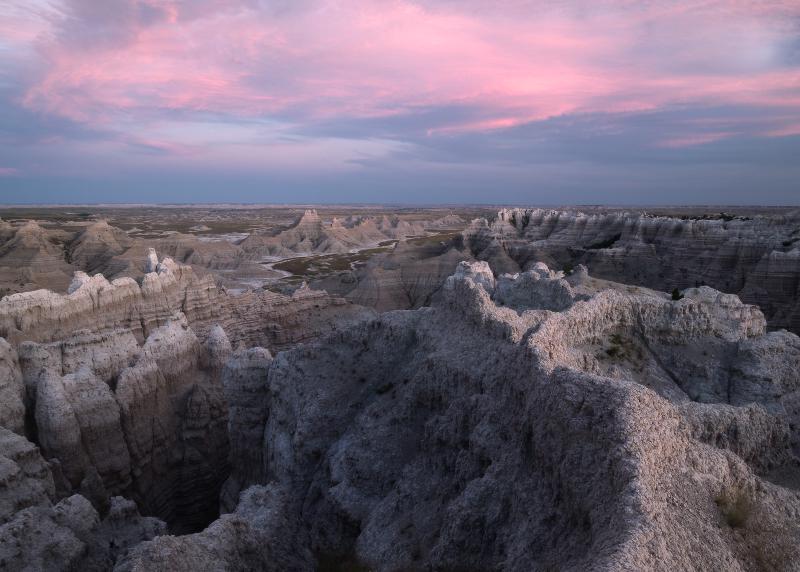
For the first couple days, I explored the more popular eastern half of the park. I spent mornings and late afternoons hiking, and used the time between to scout potential locations from which to shoot during sunrise and sunset, when the desolate landscape would come to life, ablaze in vibrant shades of red and pink. I slept in my car, woke up early, and explored to my heart’s content. I was beginning to thrive again.
Midway through my trip, I drove west, further into the park, to a second, more remote and primitive campground. As I drove, I emerged from the maze of badlands and re-entered a vast, open grassland.
The campground was nestled in that sea of swaying grasses, where I found the open space of my heartland roots and an untamed wilderness like I had first experienced in Shenandoah. Standing at my site, I heard nothing but the whisper of the wind, punctuated by the intermittent barking of prairie dogs. I was struck by that magical feeling once again, the feeling that can only be described as home. I felt comfort in the wide open spaces, the endless prairie, the vastness of the sky above me in every direction. My own existence became inconsequential as I merged with something greater than myself, simply by being there and feeling the wondrous living world around me.
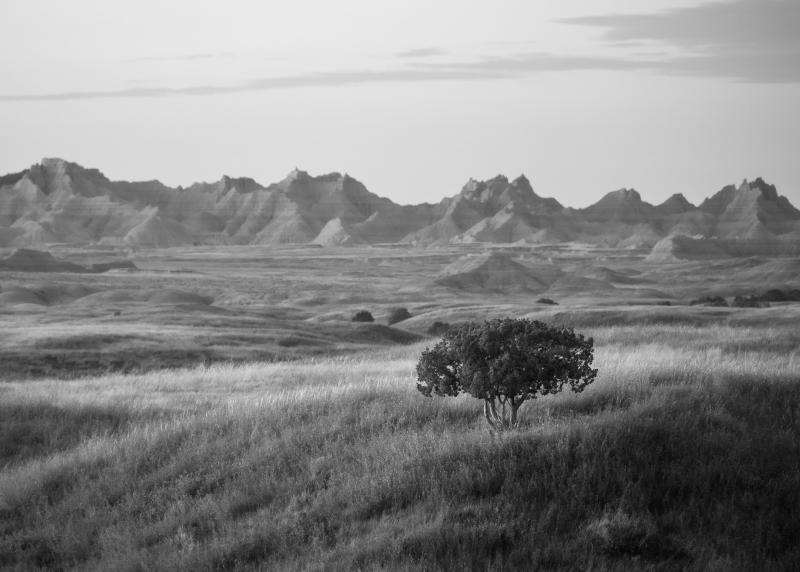
Through this communion, my love for the open spaces of the Great Plains was laid bare before me.
I have spent many nights in a tent, but never have I slept in a tent as well as I did that night. Lying on my back, glittering eternity sprawled before my eyes. Silent flashes of lightning caught my eye from the horizon. I fell asleep to the sound of the gentle wind and the chatter of coyotes in the distance.
I was at peace.
Belonging#
I returned from the Badlands a changed person. While I had traveled there seeking a sense of discovery, I hadn’t expected that discovery to take place within. I arrived back in St. Louis with a renewed sense of self and a desire to use what I had discovered to foster new connections to the local landscape.
The vast majority of my recreation in Missouri takes place within the mixed forests of the Ozark Highlands, an ecoregion that encapsulates almost the entirety of southern Missouri. This ecoregion serves as a transition from the Central Plains to the north to the rugged Boston Mountains to the south.
While this region is almost entirely blanketed by forests, some of Missouri’s most captivating landscapes can be found in spaces between the trees, among magnificent glades.
Simply stated, a glade is an oasis of rocky, open space within a woodland. Generally located in relatively higher altitudes, they are characterized by their thin soil and outcroppings of exposed bedrock. They are home to a diverse range of drought-tolerant grasses and wildflowers, many of which are also native to prairie ecosystems.
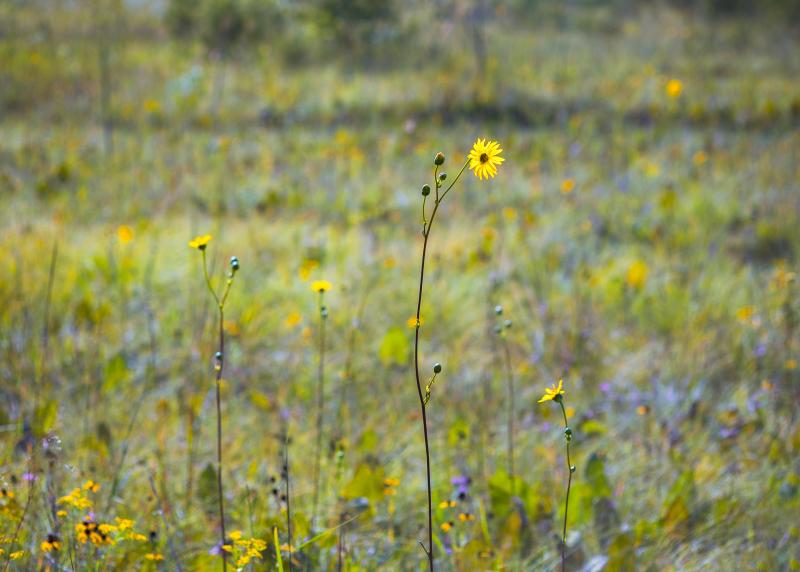
While Missouri’s glades may lack the grandiosity of Badlands National Park, they make up for it with their unique, subtle beauty. Bountiful bouquets of wildflowers emerge from every crack and crevice in the spring, spanning the spectrum from soft blue to vibrant red. Seasonal rains bring water to small streams cascading over rocky ledges and overhangs. Lush, tangled growth takes over in the summer, which brings with it a new cohort of blossoms and an army of buzzing pollinators. In the fall, the color spectrum shifts to yellow as the prairie grasses turn to amber and the surrounding woodlands don their autumnal hues. Fall’s warmth yields to winter’s cold dormancy, leaving the dried, skeletal husks of wildflowers standing silently over the glades like sundials.
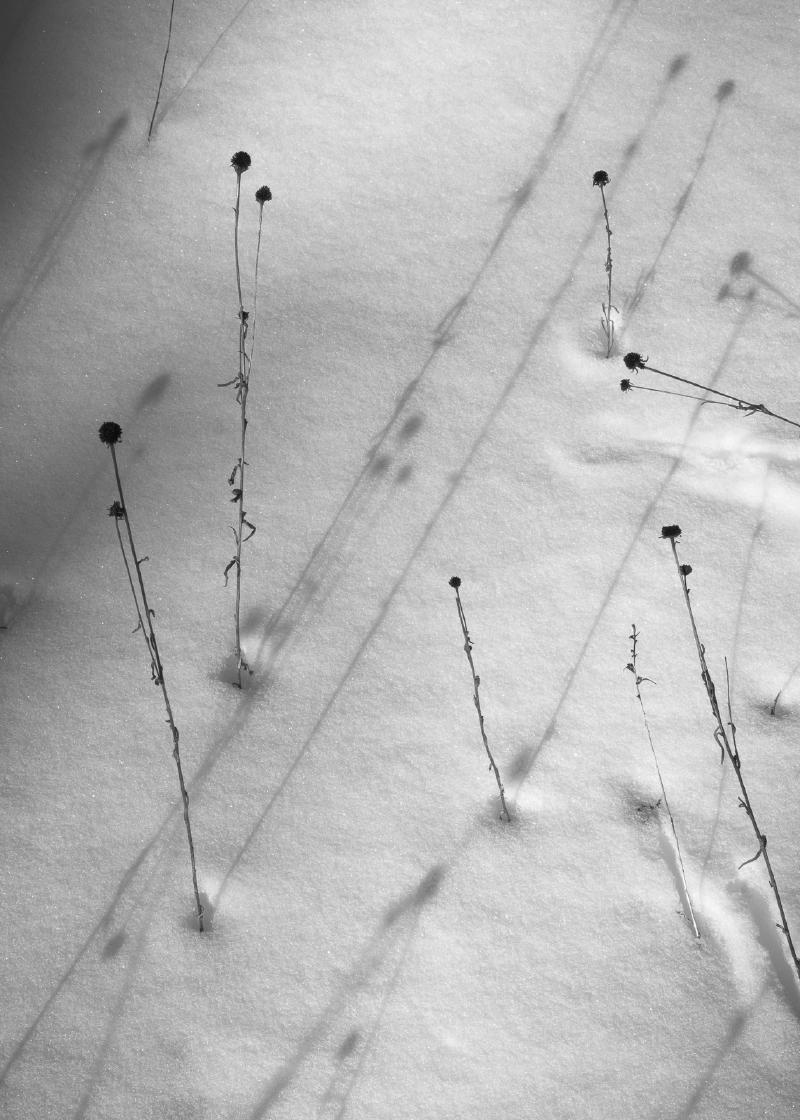
As these diverse and dynamic environments hold no shortage of captivating quiet scenes, they were the first destination that came to mind when I first began to learn the process of analog photography.
One experience on a warm summer afternoon in 2021 stands out in my memory. From the moment I emerged out of the shadowy forest and into the sunny glade, I began exploring with my Pentax K1000. I followed my intuitions as I moved from composition to composition, fully immersed in this new way of making images.
By late afternoon, the sun was low in the sky and my camera was mounted on my tripod, shutter release cable at the ready. I paused to take in my surroundings. The warm summer air was abuzz with a cacophony of insects. Grasses swayed around me, wildflowers rocking back and forth in the gentle breeze. The atmosphere was calm, yet alive, and that rare feeling of all-encompassing peace visited me once again, if only fleetingly. I began to feel like I belonged. The welcoming glimmer of home was there.
Looking back, the feeling I experienced that day was far more important to me than any of the images that I made.
I am grateful for this journey I have experienced, from my roots on the Great Plains to seeking refuge in Shenandoah National Park; from self-discovery in the Badlands to finding a sense of belonging in the glades of Missouri.
What I’ve experienced firsthand is that home is not a place. At least, it’s not just a place. It is much more than that. It is a feeling, born from connection. And while that connection hasn’t always come naturally for me in the places I have found myself over the years, I have learned that certain actions and mindsets that can help nurture it: seeking out spaces within the landscapes that speak to me, and being open to new experiences and unexpected relationships with nature.
I can’t say with certainty what new places await me in the coming years, but I hope that no matter where I go, I will be able to use what I have learned about myself to seek connection, foster belonging, and find a sense of home.