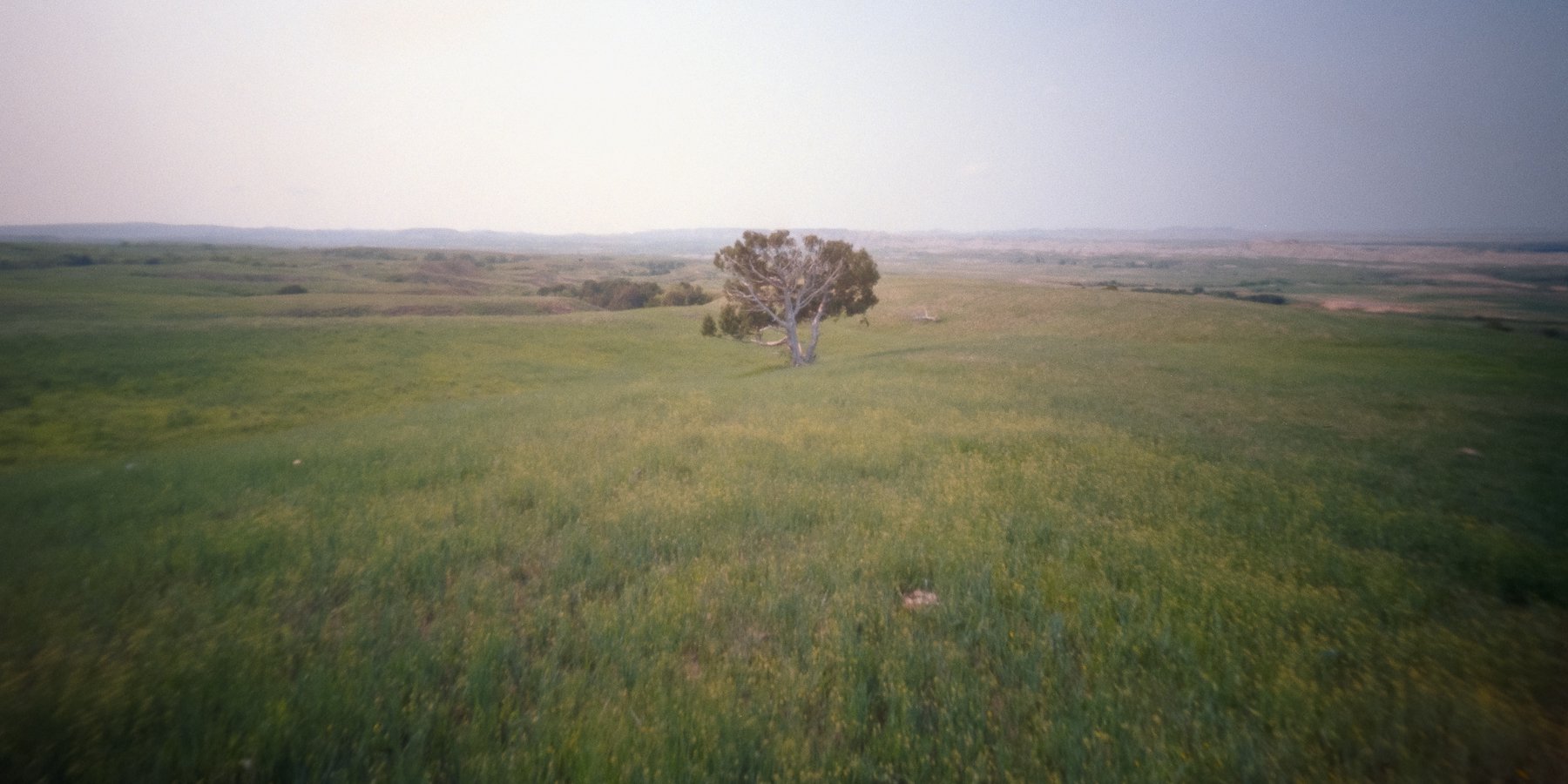
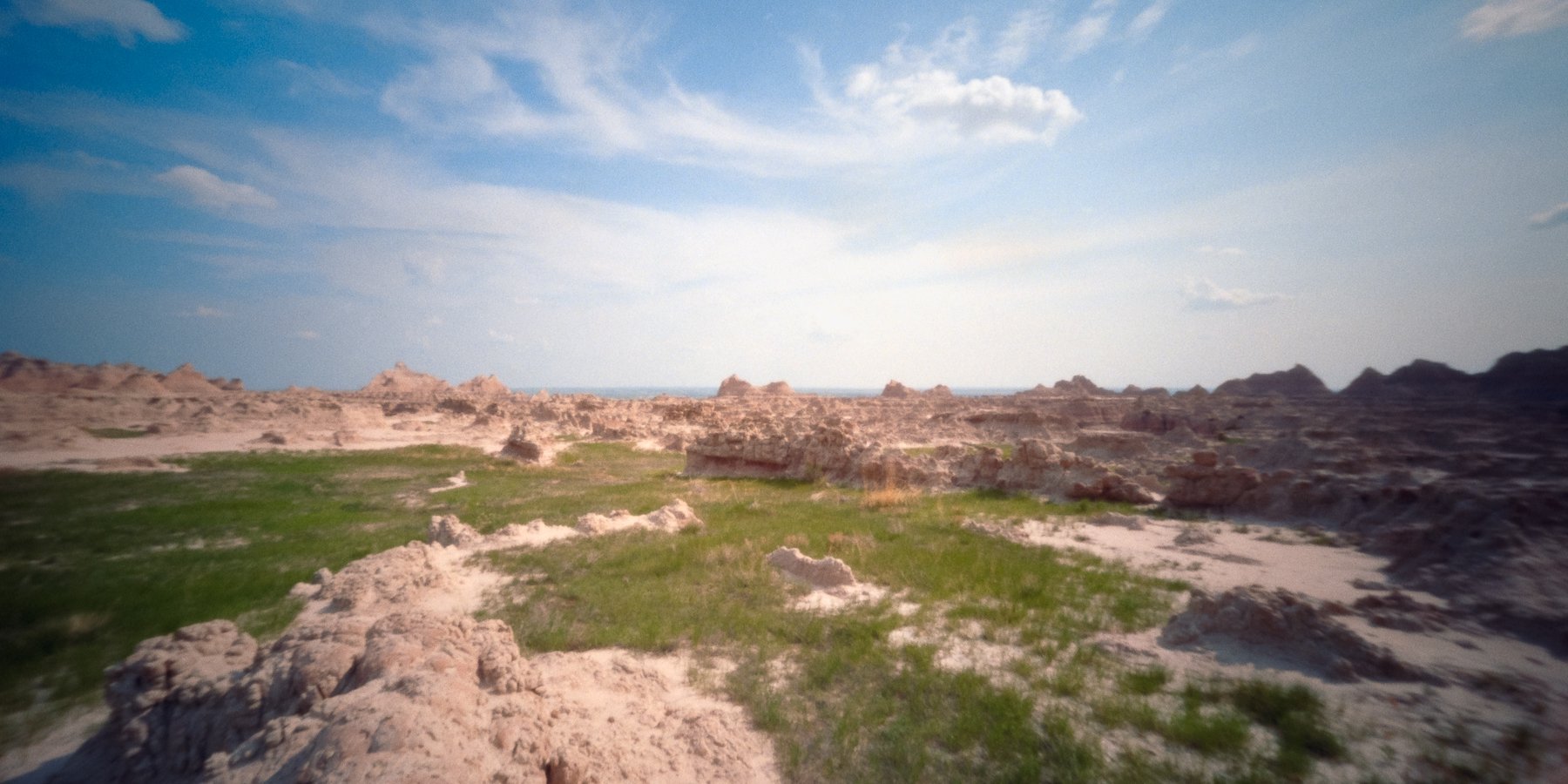
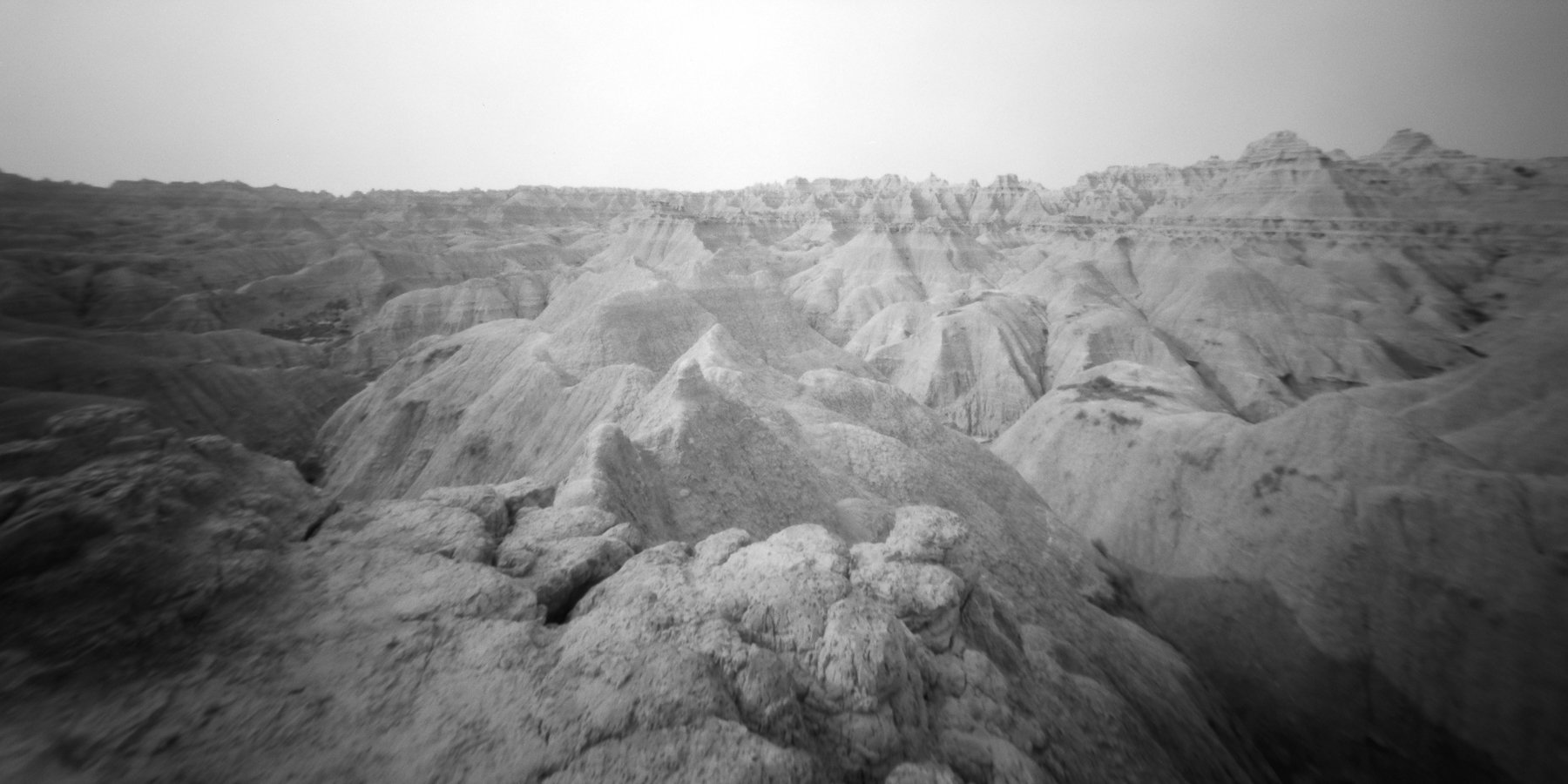
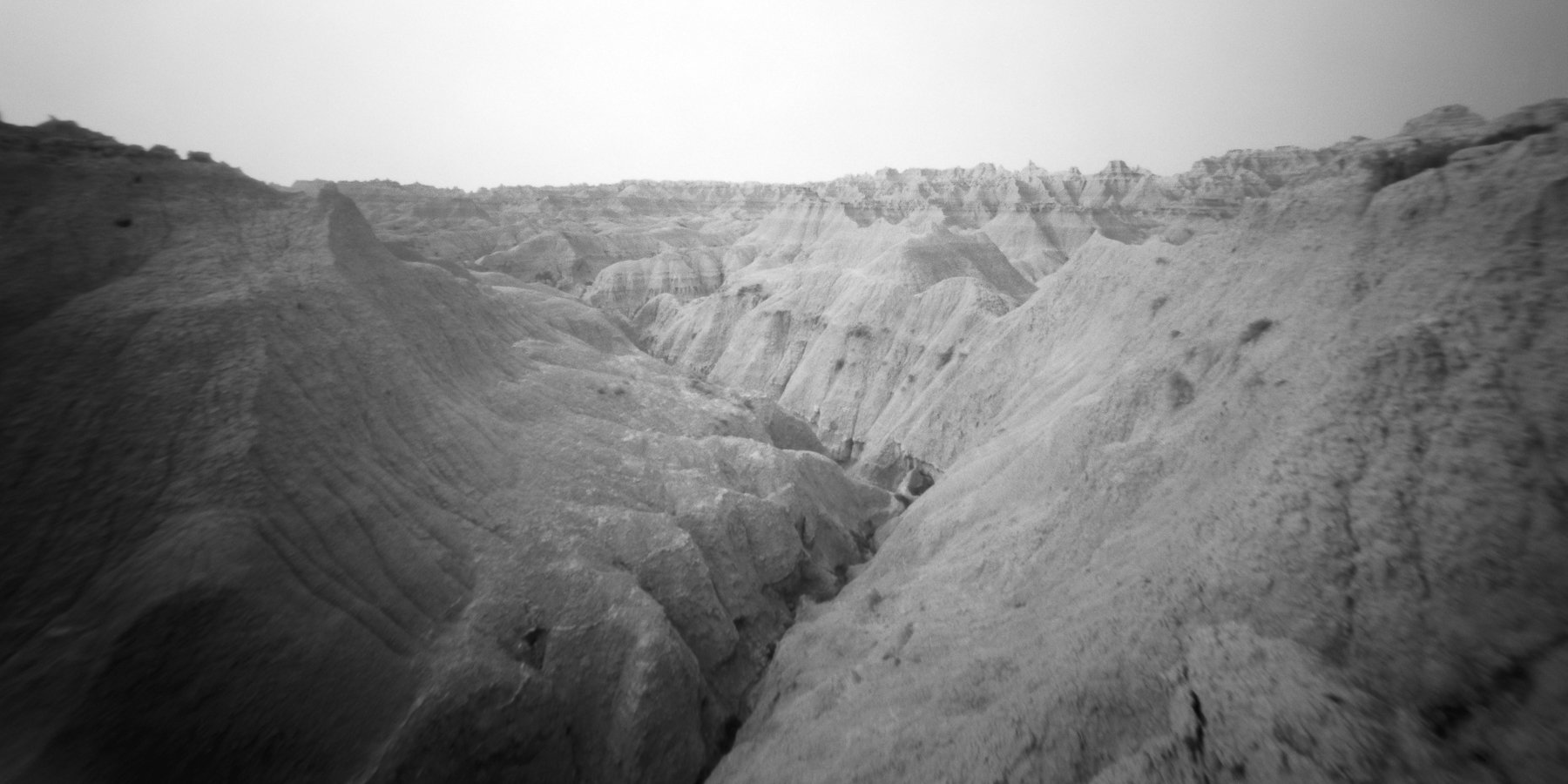
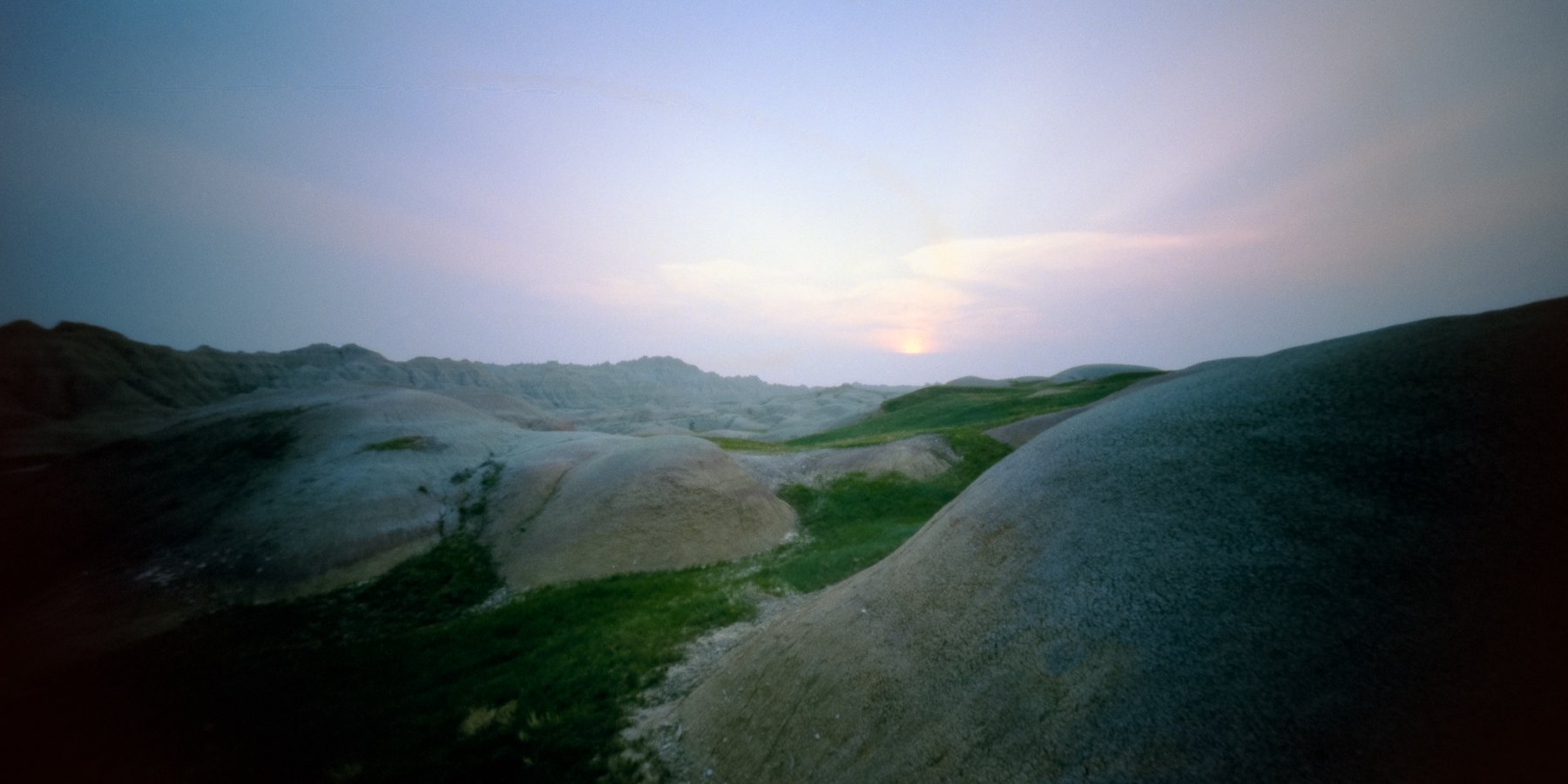
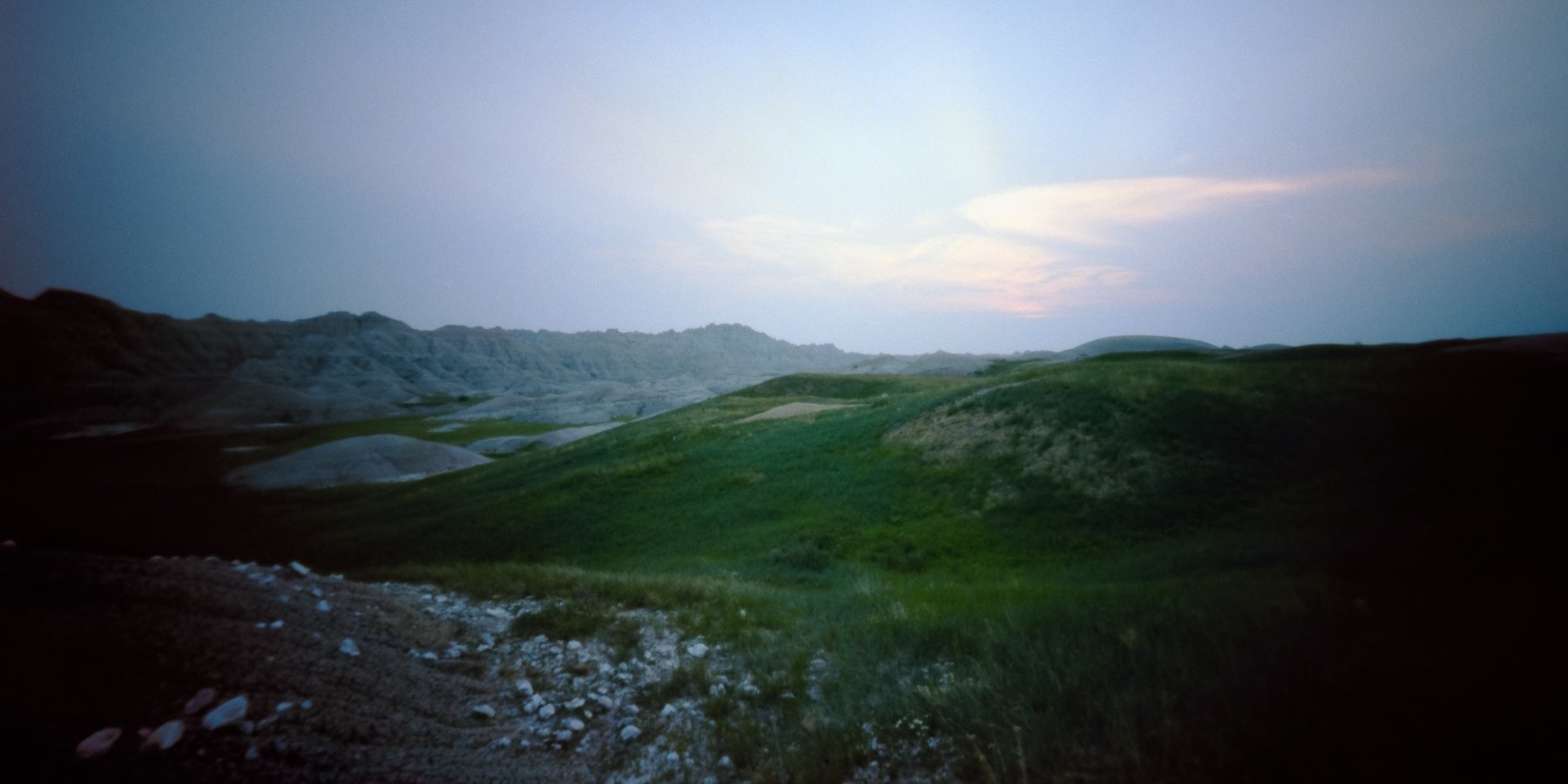
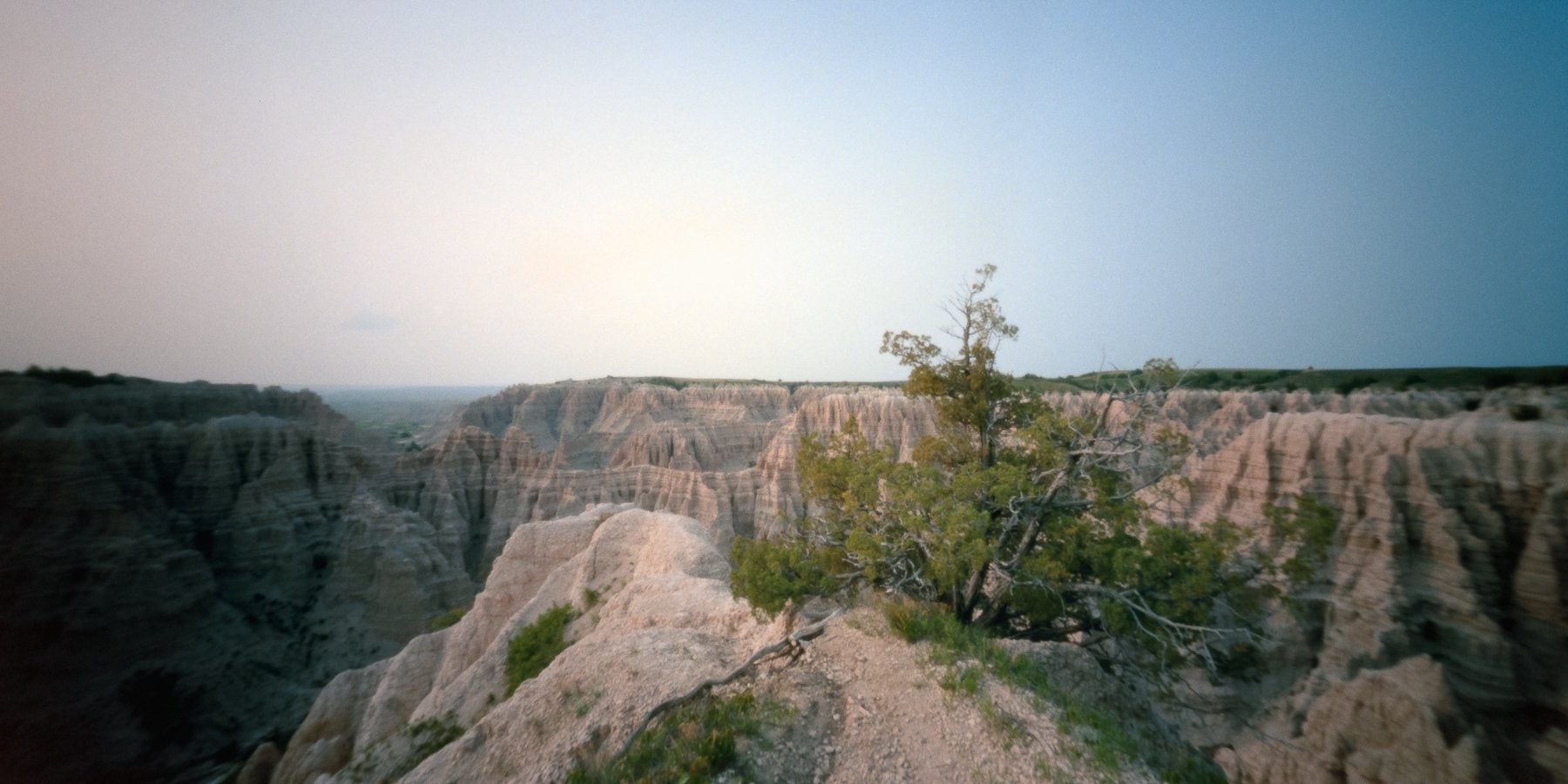
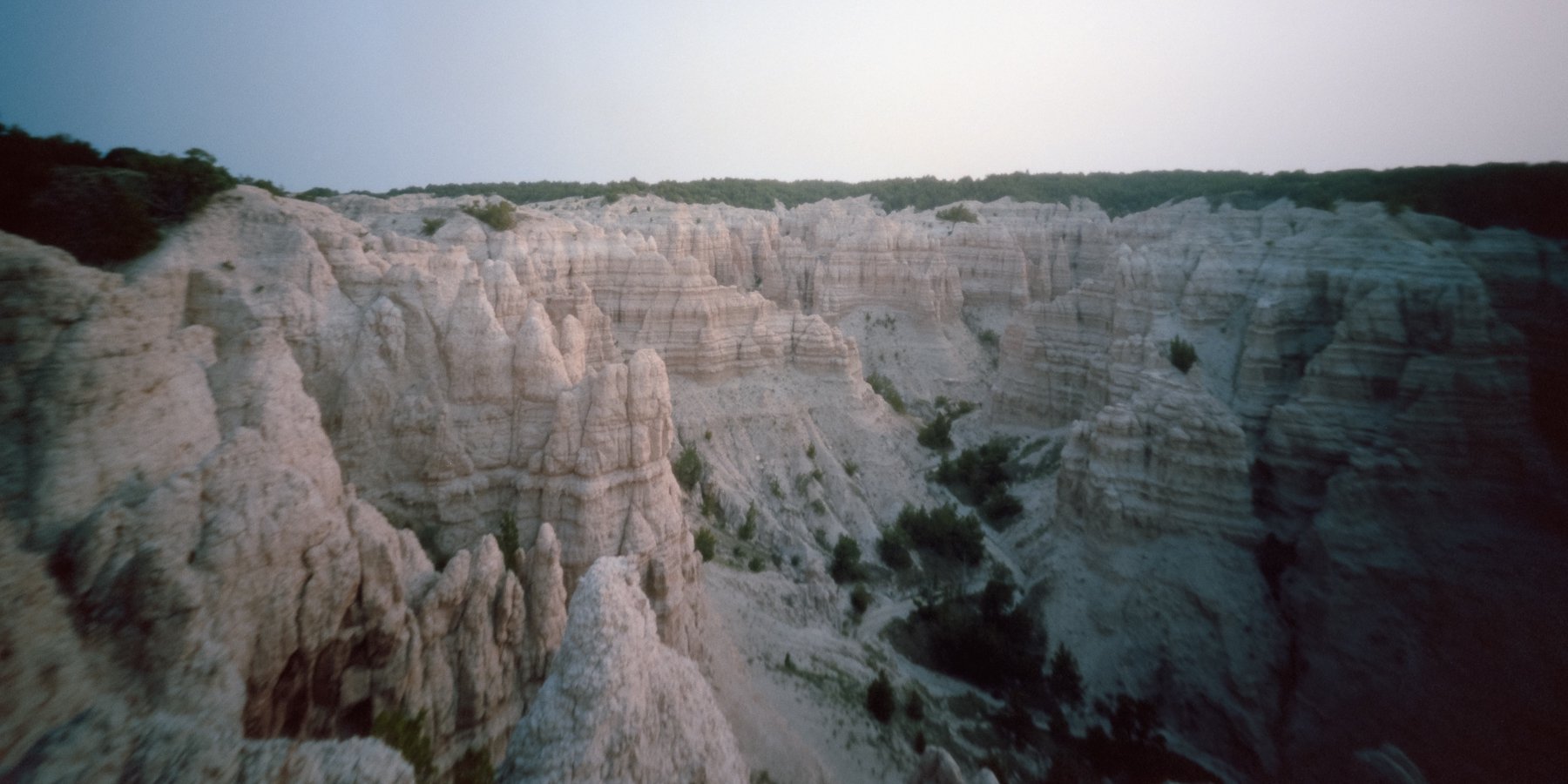
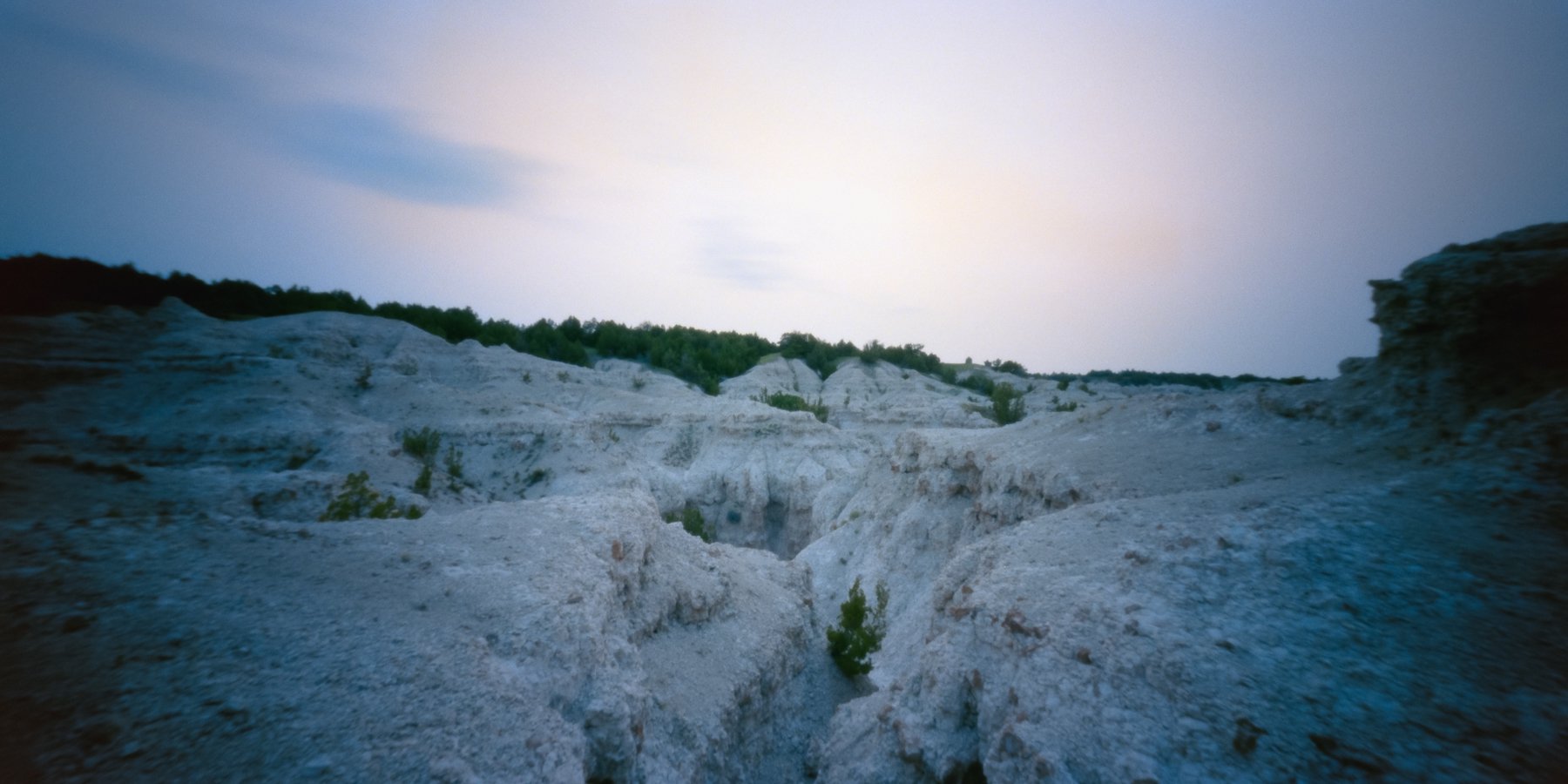
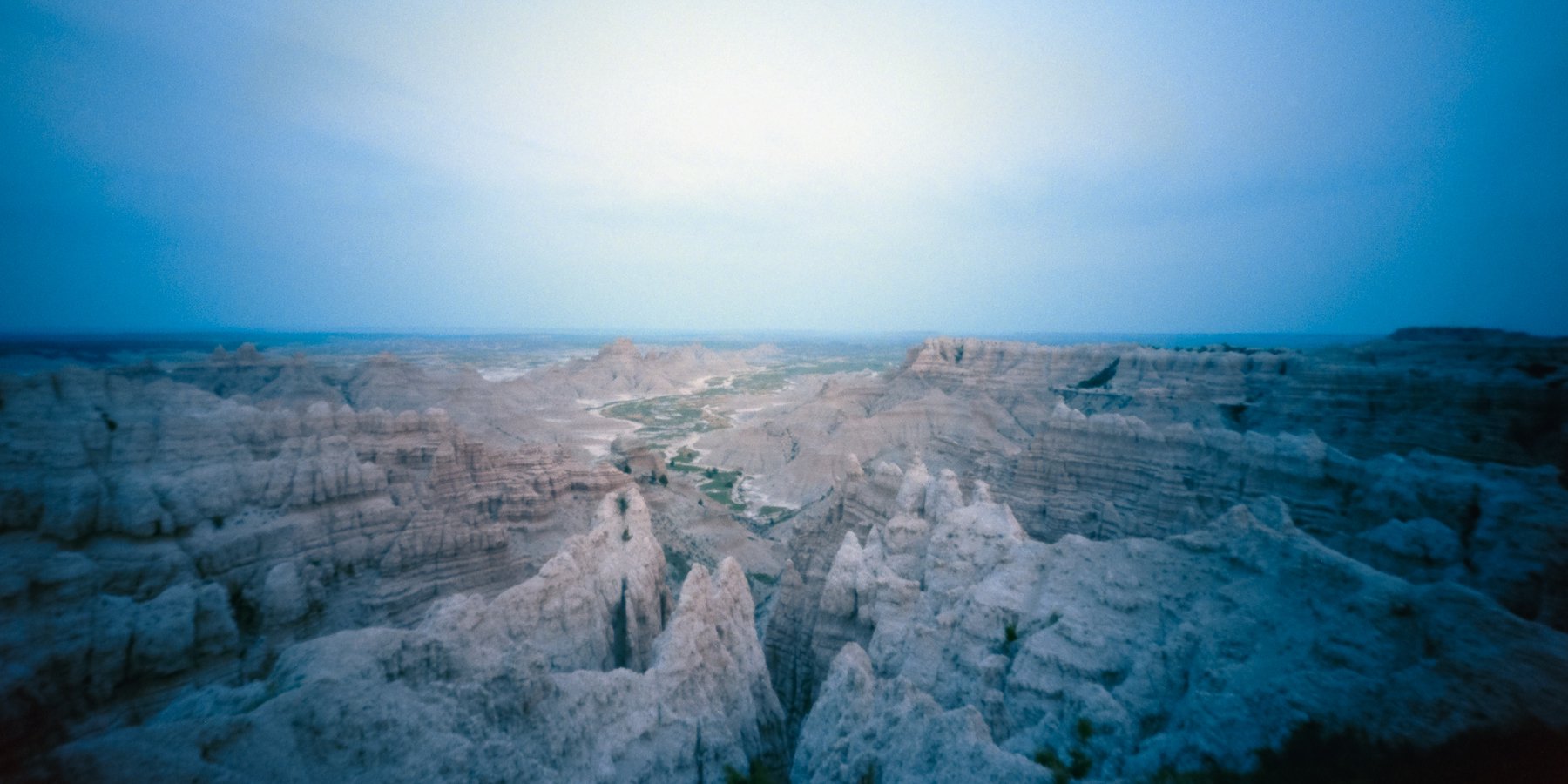
I credit my pinhole camera for being a creative life vest on my recent trip to Badlands National Park. I have discussed its role in my process before, but few times has it been more apparent than on this trip. My pinhole camera focuses my creative eye and kindles my curiosity. It helps me to let go of my inhibitions and nurture my creativity.
While the use of a pinhole camera helps to facilitate the creative process for me, the resulting images don’t always reflect that process.
One thing I quickly recognized while composing with my pinhole camera in the Badlands was my lack of experience in properly composing wide angle scenes in such a vastly open landscape. At the time, I had only ever used my pinhole camera in Missouri, where I spend most of my time among busy, chaotic forests, horizons obscured by dense tree cover and rugged, uneven terrain. I have a decent grasp on composition in these environments: point the camera at something, usually very close, and open the shutter for the center pinhole. If I use the upper or lower pinholes, the composition shifts upward or downward, respectively. I use these only occasionally, typically for compositions among larger trees where I want less ground and more trunk in the frame.
Contrast these busy forest compositions with the wide open landscapes of the Badlands. I didn’t think much as I exposed shot after shot, dutifully leveling my camera (that’s what you’re supposed to do, right?) before the sprawling formations and using the center pinhole almost exclusively.
One of the beautiful curses of shooting on film is that, if you’re like me and send your film to a lab for development, you get a few weeks of exciting, unknowing bliss while you wait to see how your images turn out. Before you get to see what mistakes you’ve made.
And I sure made some mistakes. Many were salvageable with some heavy cropping and other work in post, but as shot, most of these images were not good.
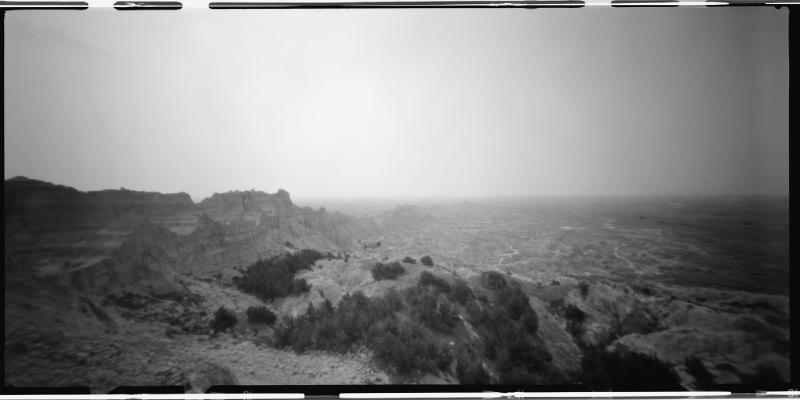
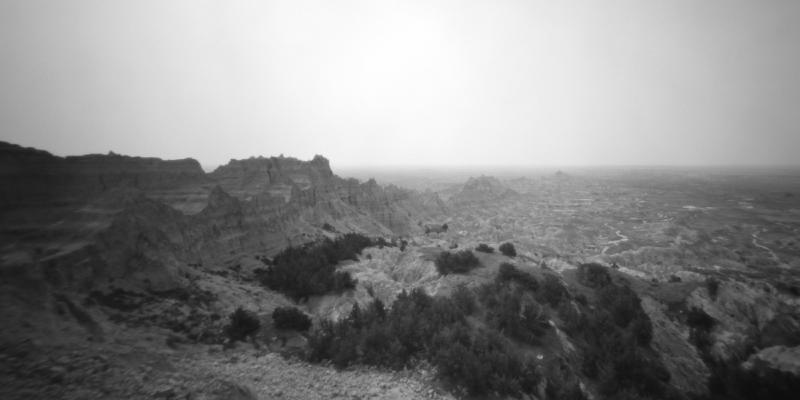
But the main draw of shooting with a pinhole camera for me is that while I’m always excited to see the results, I can make images with few expectations. I don’t typically plan to share the images, save for perhaps a feature in my newsletter or a highlight in my Instagram story, if there’s anything worth sharing at all.
For me, pinhole photography is a way of priming the creative pump. It’s about seeing; about letting go of expectations and preconceived notions of nature’s beauty. It’s about being open and receptive.
On my recent trip to Badlands National Park, that’s exactly what it helped me accomplish.
Initially, I felt like I had little to show for the five rolls of film I exposed. But once again, I need to remind myself of the bigger picture. I need to remind myself that these images, both the failures and the successes — however I define those terms at this moment — they’re not everything. They’re one chapter. These are the trees, not the forest. These images are just one small part of this story.