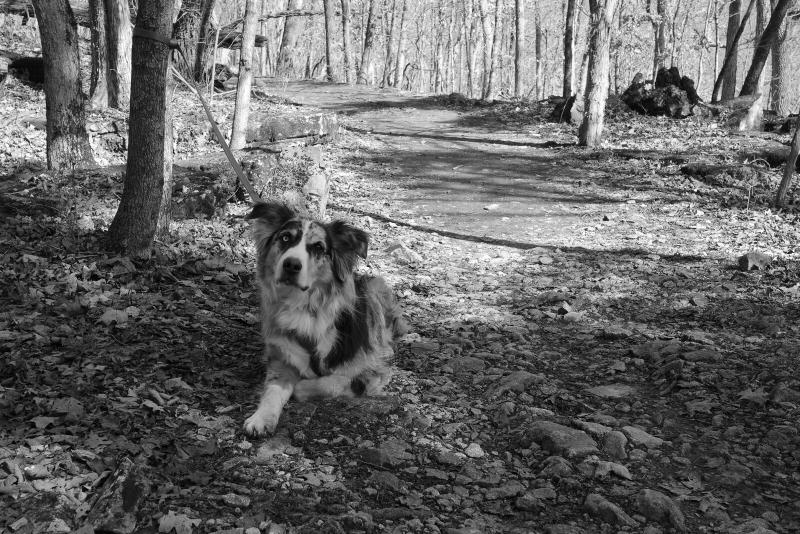
A couple weeks ago, I had a Friday off work and decided to spend the morning hiking at a favorite nearby haunt. It would be a later-than-usual start to such an outing because I was on daycare drop-off duty that week, but I was in no hurry. I was just happy to get some fresh air.
My dog Remy eyed me intently as everyone got ready for their day. I knew he could sense a difference in my morning routine. We locked eyes and I asked him if he wanted to tag along. He cheerfully agreed.
After arriving at daycare, Remy waited patiently in the car while I walked my daughter to her classroom (really, while I tried to keep up with her as she ran excitedly to her friends and second breakfast). When I returned I gave him a quick pat on the head. “Ready?!” I asked him. He cocked his head in excitement as we got back on the road.
I had an unexpected experience on that drive from daycare. As we approached the on-ramp to the interstate, I felt a sudden hesitation. I thought of the comforting familiarity of my morning brew, of settling in for some productive heads-down time at work. The legs momentarily gave out from beneath my willpower and suddenly I wanted to cave to the idea of an easy, predictable morning.
It would have been effortless to give in to that millisecond of hesitation, but my prefrontal cortex intervened just in time.
What are you thinking?!
I steered the car onto the ramp and down the road toward the trailhead. I glanced back at Remy, grinning dopily with his mouth hanging open, oblivious to the mental hurdle I had just cleared.
That moment was a bit of an epiphany for me, a manifestation of something we all probably know in the abstract, but an experience I hadn’t felt so strongly in a long time: that “the default path is the one of least resistance.” That the easiest choice is usually the most predictable one, the one where you can see several steps out. There are fewer unknowns along that path. It’s familiar and safe.
I understand the appeal, of course. Uncertainty is hard — and believe me, I know that there’s a lot of it going around.
As I drove to my hike that morning, I reminded myself that along that safe path is the least challenge and, and therefore the least growth.
I’m not old, but I’m getting older (as my Grandpa would say, it beats the alternative), and part of me wonders whether this is something that gets more difficult over time. Whether getting “set in your ways” is something that happens because we’ve stuck to comfort and familiarity for so long that our brain forgets how to respond when we disrupt that routine. The default path becomes more comfortable, and the alternate routes become more uncomfortable.
If this is the case, then I choose not to let that mental muscle atrophy. Next time I find myself veering back toward that path of least resistance, it won’t catch me off guard.